
OSHA, CBP Tighten Crane Import Checks
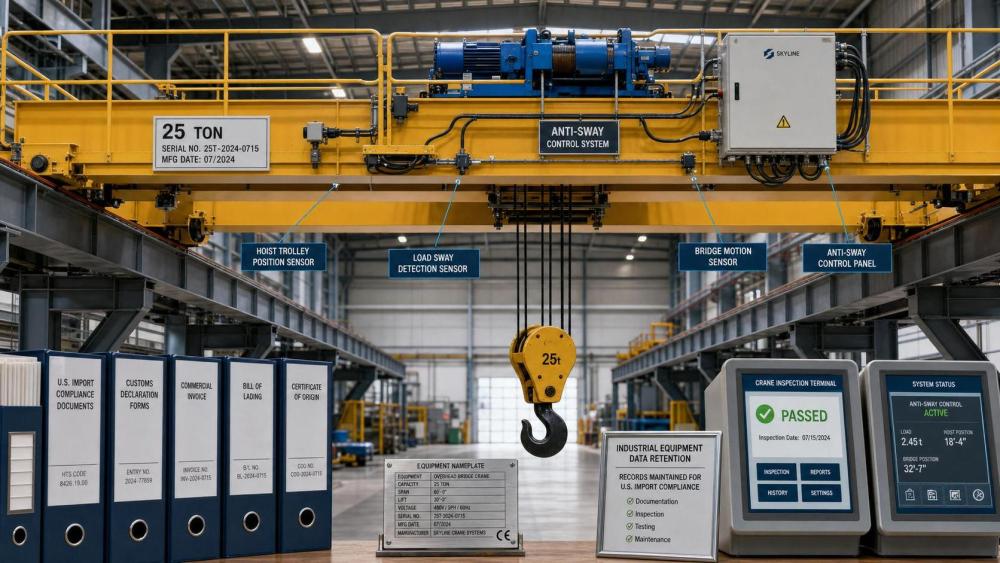
On July 12, 2026, a new U.S. import compliance development drew attention across the crane equipment and industrial control chain: OSHA and CBP jointly moved to tighten review requirements for overhead bridge cranes equipped with anti-sway control systems. For manufacturers, importers, customs teams, control system suppliers, and industrial buyers serving the U.S. market, the immediate point of attention is no longer only whether anti-sway functions are present, but whether real operating evidence for those functions can be submitted at customs in a format tied to OSHA 1910.179(e)(3).
What the new filing requirement clearly includes
According to the provided event information, OSHA and U.S. Customs and Border Protection on July 12, 2026 jointly issued strengthened import compliance guidance for heavy-duty lifting equipment. The requirement applies to overhead bridge cranes entering the U.S. market that are equipped with anti-sway control systems, including Heavy-duty Overhead Bridge Cranes and Anti-sway Crane Controls.
The guidance requires that, at the time of customs declaration, importers submit anti-sway algorithm operating logs covering no less than 30 hours of real working conditions within the previous 12 months. The required log content includes PID parameters, acceleration feedback, and spreader displacement trajectory data.
The submitted records are described as compliance evidence for OSHA 1910.179(e)(3). The provided information does not include a further breakdown of filing format, review workflow, or additional enforcement details beyond this requirement.
Where the pressure is likely to appear first in the business chain
Import transactions may face a higher documentation threshold
From an industry perspective, direct trading companies and U.S.-bound importers are the first group likely to feel the impact. The reason is straightforward: the requirement is linked to customs declaration, which means the compliance question moves into the import filing stage rather than remaining only a product-specification or contract issue. What deserves closer attention is whether documentation collection, record completeness, and submission timing can keep pace with shipment schedules.
Equipment makers may need stronger data retention discipline
For crane manufacturers and anti-sway control suppliers, the likely impact centers on product validation and record management. Analysis shows that the requirement is not limited to a general claim that anti-sway functionality exists; it points specifically to algorithm operation logs under real working conditions. That raises the practical importance of how operating records are captured, stored, retrieved, and matched to the equipment being imported.
Supply chain and customs service teams may face coordination risk
Supply chain service providers, customs brokers, and compliance support teams may be affected through documentation coordination. Observably, when filing requirements include technical control logs rather than standard commercial documents alone, cross-functional coordination becomes more important. The business risk here is less about product description and more about whether engineering-side records can be translated into submission-ready compliance materials without delaying customs procedures.
Industrial buyers may need earlier confirmation from suppliers
For procurement teams and end users sourcing overhead bridge cranes for the U.S. market, the issue may appear earlier in supplier qualification and delivery planning. Analysis shows that buyers may need to verify not only equipment configuration, but also whether suppliers can provide the required anti-sway algorithm logs covering the stated time window and data fields. This could affect pre-shipment review, delivery commitments, and contract communication.
What companies should watch in the near term
Track whether official wording is further clarified
What deserves closer attention is whether subsequent official communication adds detail on acceptable submission formats, record structure, or review expectations. The current confirmed information establishes the core requirement, but companies should distinguish between the confirmed filing obligation and any later operational interpretation that may shape day-to-day execution.
Check whether current records actually match the stated fields
For companies already supplying cranes with anti-sway functions, a practical question is whether existing logs contain the specific elements cited in the guidance: PID parameters, acceleration feedback, and spreader displacement trajectory. The key issue is not only having test or operation data, but whether the retained records align with the named evidence categories in a way that supports customs submission.
Review handoffs between engineering, compliance, and shipping teams
Observably, this type of requirement sits across multiple internal functions. Engineering teams may hold the operating data, compliance teams may interpret filing needs, and shipping or customs teams may own the declaration timeline. Companies should therefore focus on document handoff, file readiness before shipment, and internal responsibility for assembling evidence packages.
Prepare supplier and customer communication around lead times
From an industry perspective, another practical focus is communication. If supporting logs are missing, incomplete, or difficult to retrieve, the issue may affect shipment timing or customer expectations. Businesses serving the U.S. market should pay attention to how documentation obligations are reflected in supplier requests, customer updates, and delivery planning.
Why this reads as more than a routine paperwork change
Analysis shows that this development is notable because it connects import compliance with operational evidence from control algorithms in real working conditions. That makes the issue relevant not only to trade compliance teams but also to equipment control design, recordkeeping, and after-validation documentation practices.
It is more appropriate to understand this as a concrete near-term compliance change with a broader long-term signal. The confirmed fact is the new submission requirement tied to U.S. imports of specified crane equipment. The broader signal, which still requires observation, is that technical control performance records may carry greater weight in market-entry review where safety-related automated functions are involved.
How the market may best interpret this development now
At this stage, the most balanced reading is that the requirement should be treated as an actionable compliance issue rather than as a fully settled long-range market outcome. The immediate implication is clear for companies shipping covered crane equipment into the United States: documentation readiness now extends into algorithm verification logs under real operating conditions. The broader commercial and procedural effects will depend on how consistently the requirement is applied and whether further clarification follows.
Basis of this article and what still needs verification
This article is based on the user-provided news title, event date, and event summary concerning the July 12, 2026 joint guidance issued by OSHA and CBP on strengthened import compliance for heavy-duty lifting equipment. For reporting of this type, commonly relevant source categories may include official agency notices, company disclosures, industry association updates, authoritative media reports, and standards-related documents.
No specific official source link was provided in the input, so the exact primary publication path still requires ongoing verification. Follow-up attention should focus on whether additional official clarification is released regarding filing format, interpretation of required log content, and practical customs review procedures.
Related News
- How Anti-Sway Crane Automation Controls Improve Load Positioning in Bridge CranesAug 08, 2026Crane automation controls with anti-sway technology improve bridge crane load positioning, reduce settling time, and support safer, faster, more accurate material handling.
- OSHA Rule Adds Anti-Sway and Digital Load MappingAug 07, 2026OSHA rule update adds anti-sway controls and digital load mapping for U.S. forklifts. Learn what manufacturers, exporters, and buyers must review now to stay compliant.
- OSHA Tightens U.S. Import Checks for Lifting SystemsAug 01, 2026OSHA Tightens U.S. Import Checks for Lifting Systems: learn how new algorithm verification rules affect cranes, compliance costs, supplier approval, and delivery timelines.
- OSHA, CBP Tighten Crane Import ChecksJul 14, 2026OSHA, CBP tighten crane import checks for overhead bridge cranes with anti-sway controls. Learn the new 30-hour log requirement, compliance risks, and how importers can avoid costly customs delays.