
Pre-Dispatch Inspection Points That Reduce Skeletal Chassis Downtime
A skeletal chassis can look serviceable at the gate and still lose a shift a few kilometres later. A marginal brake hose may rub through after the first tight turn. A twist lock that appears closed may not fully engage a container corner casting. A tyre with no obvious sidewall damage may be carrying a slow leak that becomes critical under a loaded box. These are not paperwork defects; they are the small pre-dispatch misses that turn into roadside recovery, missed terminal slots, damaged containers, or an unavailable trailer in the middle of a transport cycle.
For operators working between ports, depots, warehouses, and road networks, the inspection needs to be short enough to complete consistently and detailed enough to catch faults before the chassis is loaded. The most useful approach is to inspect in the same order as the forces acting on the equipment: container restraint, running gear, brakes and air supply, lighting, frame condition, and coupling. Any defect that could affect safe movement, load retention, or legal road operation should be resolved before dispatch rather than noted for a later workshop visit.
Start with the operating context, not a generic walk-around
Pre-dispatch checks should reflect where the unit is going and what it will carry. A chassis making repeated low-speed port movements faces frequent braking, sharp turns, uneven paving, queueing, and contact with salt, standing water, and container-handling equipment. A unit heading onto public roads may spend longer at sustained speed, where wheel-end heat, tyre condition, loose mudguards, air loss, and lighting faults become more serious.
Container length also changes the inspection focus. A loaded 20-foot container placed on a chassis configured for different positions can create loading or handling concerns if the locking points and placement arrangement are not checked. Longer containers require confirmation that every required lock location is engaged and that no adjustable component has been left unsecured after the previous job. Where the operation handles mixed container sizes, operators should not assume that the last configuration is appropriate for the next dispatch.
A good inspection begins by confirming the dispatch information: container size, expected gross weight, route type, terminal requirements, and whether the chassis has been parked, loaded, or repaired since its last use. This takes little time but prevents an operator from inspecting the wrong configuration.
Container restraint is the first release decision
Twist locks and their surrounding structure deserve more attention than a quick visual glance. They carry the immediate responsibility for holding the container to the chassis, and problems often arise from contamination, incomplete rotation, wear, or deformation rather than an obvious broken component.
Before movement, check that the container is sitting squarely on the supporting areas and is not visibly skewed. Confirm that the required twist locks are fully rotated into the locked position and that their handles, retainers, or operating mechanisms are secure. A lock that has been rotated but has not properly seated can be difficult to identify from one side only, so a complete circuit of the chassis is preferable.
Look for the following conditions around each locking point:
- Rust scale, packed mud, ice, cargo debris, or hardened grease preventing full movement;
- Cracked, bent, or excessively worn lock heads, handles, brackets, and mounting plates;
- Locks that move freely when they should be held in position;
- Fresh scrape marks around corner castings, which can indicate poor alignment during loading;
- Damage to adjacent cross-members or frame rails caused by handling impacts.
Do not use a damaged lock as a temporary exception simply because the container appears stable while parked. Dynamic forces from braking, turning, road joints, and uneven surfaces are different from static yard conditions. If a lock does not operate correctly, the chassis should be held until a competent repair process confirms that the restraint arrangement is safe for the intended load.
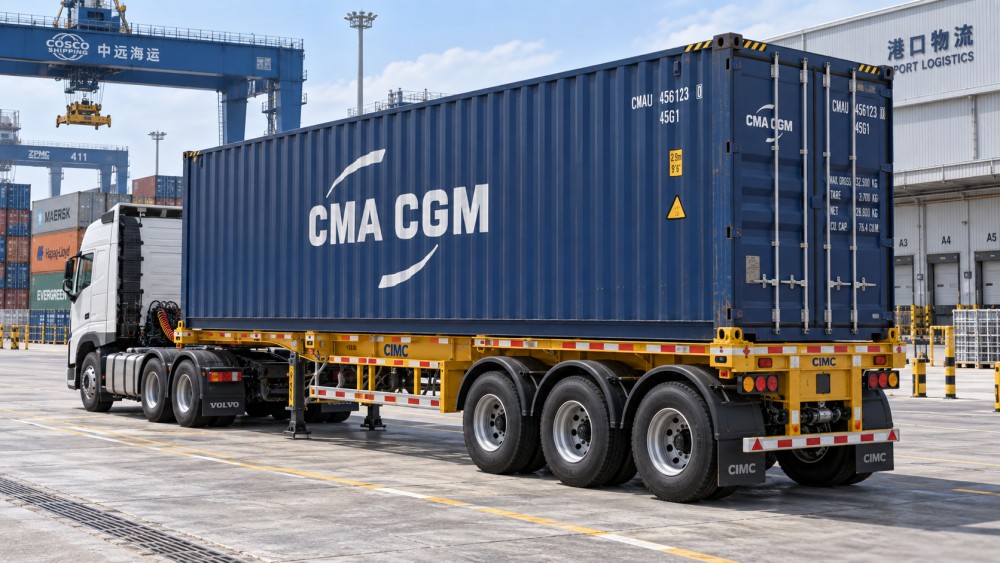
Check the chassis frame where fatigue and impact damage usually appear
The open-frame design of a container chassis makes inspections easier in some respects, but it also leaves rails, cross-members, braces, and lock mountings exposed to impacts and corrosion. Operators do not need to diagnose structural engineering issues at the gate. They do need to recognise changes that should stop the unit from being dispatched.
Walk along both main rails and inspect areas near the landing gear, suspension mounts, axle brackets, rear bumper structure, and container lock assemblies. Fresh paint cracking, distorted members, split welds, or a visibly uneven rail line can point to an impact or overload event. Pay attention to places where mud and water collect. Corrosion may be superficial, but heavy flaking around a bracket, weld, or connection can hide a loss of material that needs workshop assessment.
Landing gear also needs a functional check before the unit is coupled or uncoupled. The legs should be raised fully for road travel, the crank handle retained, and the cross-shaft intact. Bent feet, stripped gears, or legs that do not travel evenly can cause delays at a delivery point even if they do not immediately prevent towing. If a driver must improvise with blocks or external lifting equipment because the landing gear will not support the trailer safely, the resulting delay can exceed the time saved by dispatching with a known fault.
Running gear faults rarely improve during a loaded trip
Tyres, wheels, hubs, suspension, and brakes determine whether a chassis completes its route. An operator should inspect them while the unit is stationary and unloaded where possible, because a defect can be hidden once the chassis is under a container.
Tyres, wheels, and wheel ends
Check tyre inflation visually and investigate any tyre that appears lower than its pair on the same axle. Look for cuts, exposed cords, bulges, embedded objects, irregular wear, and tread damage. Shoulder wear may suggest alignment, suspension, or inflation problems; a tyre with a local flat spot may indicate a braking or wheel-lock event. Such patterns do not always require an immediate roadside diagnosis, but they should not be ignored when the unit is scheduled for a loaded road journey.
Wheel fasteners should be present and show no signs of looseness. Fresh rust streaks around studs, shiny movement marks, cracked rims, or lubricant around a hub can justify removing the chassis from service for inspection. A hub that has recently run hot may also leave discoloured paint or a burnt smell. Operators should not touch a potentially hot wheel end after recent movement; visual checks and safe reporting procedures are more appropriate.
Suspension and axle attachments
Inspect suspension components for displaced air springs, damaged shock absorbers, broken leaves where applicable, loose fasteners, cracked hangers, and contact marks where tyres may be rubbing. On air-suspension units, an obvious lean can indicate an air spring, valve, or linkage issue. A chassis that sits unevenly may still be movable in the yard, but road dispatch should wait until the source is understood.
Axle and suspension defects can accelerate tyre wear and affect braking stability. The cost is not limited to replacement parts: a tyre failure can block a gate lane, delay a container release, and create additional handling when a loaded chassis must be transferred or recovered.
Air, brakes, and electrical connections need a functional check
Many downtime events begin with couplings that were connected but not verified. Before departure, inspect air lines and electrical leads for abrasion, crushed sections, loose fittings, damaged seals, and routing that allows contact with the chassis, tyres, or ground during turns. The lines should have sufficient slack for articulation without hanging so low that they snag on terminal surfaces.
After coupling, listen for continuous air leakage and confirm that the system charges normally. A brief sound during connection may occur, but persistent leakage at a gladhand, hose, valve, or chamber needs attention. Check that parking brakes release and apply as expected, following site safety procedures. Where the operating process permits, a controlled brake function check before joining traffic can expose a problem that a visual inspection cannot.
Lighting should be checked with the tractor connected. Brake lights, tail lights, indicators, marker lights, and number-plate illumination may be subject to road rules that vary by jurisdiction, but their operational purpose is consistent: other road users must be able to see the chassis and understand its movements. Inspect lamps and connectors for broken lenses, water ingress, loose mounting, and cable damage. A lamp fault may seem minor during daylight, yet it can stop a unit from being accepted for a later-night return journey.
Coupling checks protect both the tractor and the chassis
The fifth-wheel connection is often treated as a tractor inspection item, but chassis operators benefit from confirming that the coupling area is clean, undamaged, and compatible with the assigned tractor. Check the kingpin for excessive wear, deformation, contamination, or damage around its mounting plate. Inspect the area for cracks, loose fasteners, or a bent skid plate. If the chassis has been dropped roughly, the landing gear, kingpin area, and front cross-members may all show related damage.
Once coupled, confirm that the trailer is properly seated, the fifth wheel has locked, and the landing gear is fully raised before movement. A tug test or other approved coupling confirmation method is useful because visual assumptions are unreliable when dirt, poor lighting, or awkward ground conditions are involved. Never rely on air and electrical connections as evidence that the mechanical coupling is secure.
Use defect severity to avoid both unsafe dispatch and unnecessary holds
An effective checklist distinguishes between defects that require an immediate hold and those that can be reported for planned repair. A missing or non-functioning required twist lock, air leak affecting brake operation, structural crack, damaged wheel, insecure coupling, or major lighting failure should normally prevent road dispatch. Minor surface corrosion, a faded label, or a small cosmetic scratch may be recorded without grounding the unit, provided it does not conceal a more serious issue.
This distinction should be set by the operator’s maintenance and safety procedures, not by personal judgement alone. Repeated vague reports such as “trailer damaged” are difficult for maintenance teams to act on. Better defect reports identify the location, component, symptom, and operating condition: for example, “left rear lock handle will not retain in closed position” or “right-side air hose rubbing on suspension bracket during full turn.” Clear reporting helps technicians prepare parts and reduces the chance that the same chassis is repeatedly presented for dispatch with an unresolved fault.
Build the inspection around the actual chassis configuration
When fleets source or replace equipment, the inspection process should be reviewed alongside the specification. Frame layout, lock arrangement, axle configuration, landing gear design, brake components, and access to service points affect how easily a defect can be found and corrected. Product drawings and configuration details for a skeletal container chassis can help maintenance and operating teams compare the physical arrangement against the container sizes, routes, and handling methods used in their own work.
The practical question is not whether a chassis has passed a quick walk-around, but whether it is ready for the exact duty assigned to it. A consistent pre-dispatch sequence, backed by clear hold criteria and useful defect reporting, catches the faults most likely to interrupt container movement after the gate. That is where downtime is reduced: before the load is committed to the road.
Related News
- Pre-Dispatch Inspection Points That Reduce Skeletal Chassis DowntimeSep 24, 2026Skeletal container chassis pre-dispatch inspection points: check twist locks, brakes, tyres, frame, and coupling to prevent downtime, delays, and costly roadside failures.
- How to Select Container Terminal Equipment for Throughput, Yard Layout, and TCOSep 13, 2026Container Terminal Equipment selection guide: match throughput, yard layout, energy options, automation, and total cost of ownership for smarter terminal investment.
- How to Select Warehouse Lift Tables for Load Capacity, Travel Height, and Duty CycleSep 10, 2026Lift tables warehouse selection guide: match load capacity, travel height, duty cycle, safety, and workflow needs for reliable material handling.
- Is predictive maintenance financially justified for small warehouses with under 50,000 sq ft?Sep 13, 2026What height should a lift table be set for ergonomic packing stations? Discover how optimizing this—before investing in predictive maintenance—boosts ROI in small warehouses.