
Electric Lift Tables: Battery Runtime, Charging, and Uptime
Electric Lift Tables: Battery Runtime, Charging, and Uptime
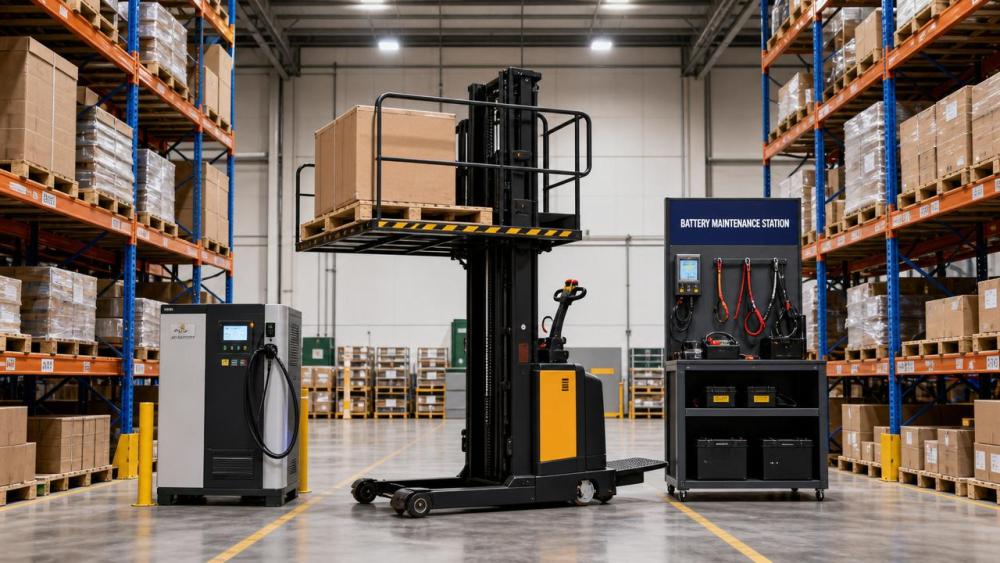
For after-sales maintenance teams, electric lift tables are only as productive as their battery runtime, charging efficiency, and daily uptime.
Understanding power behavior helps reduce unplanned stops, repeat service calls, and avoidable battery damage.
This matters even more in busy warehouses, assembly lines, and logistics hubs with tight shift schedules.
In practice, electric lift tables fail less from lifting mechanics than from neglected charging routines and battery stress.
That is why battery runtime, charging windows, and uptime should be reviewed together, not as separate maintenance topics.
A reliable electric lift table depends on power quality, duty cycle, operator habits, and correct service intervals.
This guide explains how those factors connect and what to check when performance starts drifting.
Why Battery Runtime Changes in Real Operations
Rated runtime rarely matches the floor reality of electric lift tables.
Manufacturers often test under controlled load, moderate temperature, and steady cycle frequency.
Actual sites introduce heavier pallets, more starts and stops, uneven charging, and older batteries.
As a result, electric lift tables may lose usable runtime long before the battery reaches end of life.
The biggest driver is duty cycle.
A table used for occasional lifting behaves very differently from one supporting continuous picking or line-side feeding.
Frequent lifting draws higher current and increases heat in the battery, contactors, and hydraulic motor circuit.
Load weight also matters.
When electric lift tables operate close to rated capacity, each lift cycle consumes more energy.
Travel distance, lift height, and platform pauses further change the daily energy profile.
Battery age adds another layer.
Even if voltage looks normal at rest, weakened cells can sag under load.
That voltage drop often appears first as slower lifting, relay chatter, or intermittent low-battery alarms.
From a service view, runtime complaints should always be linked to site conditions, not battery label capacity alone.
Key runtime variables to record
- Average load per cycle and peak load events
- Lifts per hour and total operating hours
- Ambient temperature and cold-room exposure
- Battery age, chemistry, and charge history
- Hydraulic leaks, drag, or mechanical binding
Battery Chemistry and What It Means for Service
Not all electric lift tables respond the same way because battery chemistry shapes charging behavior and service needs.
Lead-acid batteries remain common in cost-sensitive applications.
They are familiar, but they demand more discipline.
Partial charging, deep discharge, poor watering, and corrosion around terminals can reduce runtime quickly.
Lithium-ion systems are increasingly used on electric lift tables where uptime pressure is higher.
They support faster charging, more stable voltage, and less routine maintenance.
Still, they are not maintenance-free.
Battery management system alerts, charger compatibility, and temperature protection must be checked during diagnostics.
This is where many avoidable errors happen.
A site upgrades the battery, but keeps an unsuitable charger or old cable set.
The result is inconsistent charging, reduced battery life, and confusing fault patterns.
Lead-acid versus lithium-ion in daily maintenance
Charging Practices That Protect Uptime
Charging is not just an electrical task.
It is a scheduling decision that directly affects electric lift tables availability.
Poor charging habits create the kind of failures that look random but repeat weekly.
One common issue is charging too late.
Operators try to finish a shift on a weak battery, then report low lifting speed near the end.
Another issue is interrupting charge cycles without a site rule on when that is acceptable.
For lead-acid electric lift tables, repeated short charging can accelerate sulfation.
For lithium-ion units, frequent top-up charging may be fine, but only within manufacturer guidance.
Charging areas also deserve more attention than they usually get.
Loose connectors, heat buildup, dust, and damaged cables quietly shorten uptime.
In real facilities, those small issues often explain why identical electric lift tables perform differently.
Practical charging rules
- Match charger output to battery voltage, chemistry, and capacity.
- Inspect plugs, cables, and terminals for heat discoloration weekly.
- Set charge windows around shift changes, not emergency downtime.
- Track charge completion and interrupted sessions in service logs.
- Keep charging zones ventilated, dry, and free from impact damage.
How to Diagnose Uptime Loss Faster
When electric lift tables show poor uptime, battery issues are only one part of the story.
The fastest troubleshooting method is to separate energy loss from mechanical loss.
Start with basic symptoms.
Does the table lift slowly all day, or only after several cycles?
Does the battery gauge drop sharply under load, then recover at rest?
Is the charger ending normally, or stopping early?
Those clues help narrow the fault before parts are replaced.
Hydraulic inefficiency can mimic battery weakness.
If fluid condition is poor, relief settings are off, or seals are leaking internally, electric lift tables consume more power per lift.
Mechanical friction has a similar effect.
Worn rollers, bent scissor arms, and misalignment increase current draw and reduce effective runtime.
This is why uptime analysis should combine electrical checks with load and motion checks.
A simple troubleshooting sequence
- Confirm battery voltage at rest and during lift load.
- Review recent charging records and charger fault history.
- Check cable resistance, fuse condition, and contactor response.
- Inspect hydraulic oil, pump noise, and cylinder leakage.
- Measure actual load against rated capacity and cycle count.
Standards, Safety, and Service Documentation
Technical uptime is only useful when it aligns with safety and documentation discipline.
Electric lift tables operate in environments where battery charging, lifting stability, and operator protection overlap.
That makes service records more valuable than many teams realize.
A clean history of runtime complaints, battery replacements, charger settings, and recurring faults can reveal the real pattern.
It also supports compliance reviews and supplier discussions.
Depending on region and application, maintenance teams may need to reference OSHA requirements, site electrical rules, and manufacturer inspection intervals.
For battery-powered equipment, lockout practices and charging-area safety checks should be part of the routine.
The stronger signal here is simple.
Electric lift tables stay available longer when maintenance is documented with the same discipline used for repairs.
How to Improve Daily Uptime Without Overhauling the Fleet
Not every site needs a battery upgrade to improve electric lift tables performance.
Often, the fastest gains come from better routines.
Start by grouping tables by duty intensity.
Units in high-cycle applications should not follow the same charging plan as lightly used tables.
Then review whether runtime complaints are tied to specific shifts, temperatures, loads, or operators.
That kind of pattern usually points to a correctable process issue.
It also helps to define a replacement threshold before the equipment becomes unreliable.
Waiting until electric lift tables fail mid-shift usually costs more than replacing weak batteries earlier.
In actual operations, uptime improves when service teams combine battery data, mechanical inspection, and operator feedback.
That approach is practical, measurable, and easier to sustain.
Action checklist for better results
- Create separate service profiles for high-cycle and low-cycle electric lift tables.
- Standardize charger inspection and battery health review every month.
- Log runtime loss by shift, load type, and ambient condition.
- Replace damaged connectors and high-resistance cables before failure occurs.
- Use service data to plan battery replacement instead of reacting to breakdowns.
When electric lift tables are managed through runtime data, charging discipline, and targeted inspections, uptime becomes far more predictable.
That gives maintenance teams a clearer path to faster troubleshooting, lower lifecycle cost, and more reliable material handling performance.
Related News
- Evaluating Quality Control Protocols for Marine Dredging Equipment Sourced from China-Based ManufacturersSep 11, 2026dredging equipment manufacturer: Discover how to verify real-world QC protocols—not just certifications—for reliable marine dredging gear from China.
- Warehouse Safety Compliance Audit Checklist: What to Inspect Before an OSHA VisitSep 08, 2026Warehouse safety compliance audit checklist for OSHA readiness. Inspect forklifts, racks, charging zones, automation, docks, exits, and corrective actions.
- How Much Does CE ATEX Compliance Cost for Industrial Equipment? Key Cost DriversSep 05, 2026CE ATEX Compliance cost explained: discover the key cost drivers for industrial equipment, from hazardous-area design to certification, documentation, and installation planning.
- Forklift Safety Standards for Cold Storage: OSHA Rules and Risk ControlsSep 02, 2026Forklift Safety Standards cold storage: explore OSHA rules, freezer-specific risk controls, inspections, battery safety, and traffic management strategies.